Types of Card Breaks, Explained: PYT, Random Team, PYP and More
· Breaker Labs
A card break splits a box or a case of cards between a group of buyers. The breaker opens it live, and each buyer keeps the cards that belong to their spot. The type of break is the rule that decides what a spot is and which cards go with it.
The same case can be sold a dozen ways. This guide explains each format in plain terms: what a buyer is buying, how the spots get decided, and when breakers reach for it.
The formats at a glance
| Format | What a buyer buys | Who decides which spot | Usual number of spots |
|---|---|---|---|
| Pick your team (PYT) | One team | The buyer | 30 or 32 |
| Random team | A spot, team unknown | A randomizer | 30 or 32 |
| Team draft | A spot in the draft order | A randomizer, then the buyer | 30 or 32 |
| Divisional | A whole division | The buyer or a randomizer | 4 to 8 |
| Pick your player (PYP) | One player | The buyer | Dozens to hundreds |
| Random player | A spot, player unknown | A randomizer | Dozens to hundreds |
| High bid | One team, at auction | The bidding | 30 or 32 |
| Box and pack breaks | A box or a pack | The buyer or a randomizer | Up to the breaker |
| Case breaks | Usually a player from the whole case | The buyer or a randomizer | Dozens to hundreds |
| Serial number | A digit, 0 to 9 | The buyer or a randomizer | 10, or 10 per team |
| Hit draft | A pick in the draft of hits | A randomizer | Up to the breaker |
Pick your team (PYT)
In a pick your team break, every team in the league is a spot and each buyer chooses the team they want. You get every card pulled for that team, whatever the box holds.
Because buyers choose, teams are priced by demand. The teams with the rookies and stars everyone is chasing cost the most, and the teams with a thin checklist cost the least. That makes PYT the format for buyers who follow one team or one player, and the format where the breaker has to price thirty-odd spots well.
Listings often say "PYT" in the title, and a buyer who sees it expects to name their team at checkout.
On a board: a team board shows every team, and a sold team is marked the moment you sell it. See the widget editor guide to build one, and Top Teams and Last Team to rank the teams everyone is chasing.

Random team
In a random team break, every spot costs the same and nobody knows their team when they buy. Once the spots are sold, the breaker randomizes buyers against teams on stream, so everyone sees the draw happen.
Random team breaks are cheaper per spot than the top teams in a PYT break and more expensive than the bottom ones, because the price is the average. Buyers like them for the chance at a top team at a flat price. Breakers like them because every spot sells at the same speed.
On a board: spin a wheel on stream for each buyer and the team it lands on is theirs. The Randomizer Wheel removes each team as it is drawn, and there is a free random wheel with no account needed.
Team draft
A team draft sits between the two. Buyers pay the same price for a spot, a randomizer sets the order, and then each buyer picks a team in turn. The first pick takes the best team on the board and the last pick takes what is left.
Some breakers run it as a snake draft when buyers hold more than one spot, so the order reverses each round.
On a board: put the buyers on a wheel to set the order, then mark each team sold on a team board as it is picked.
Divisional
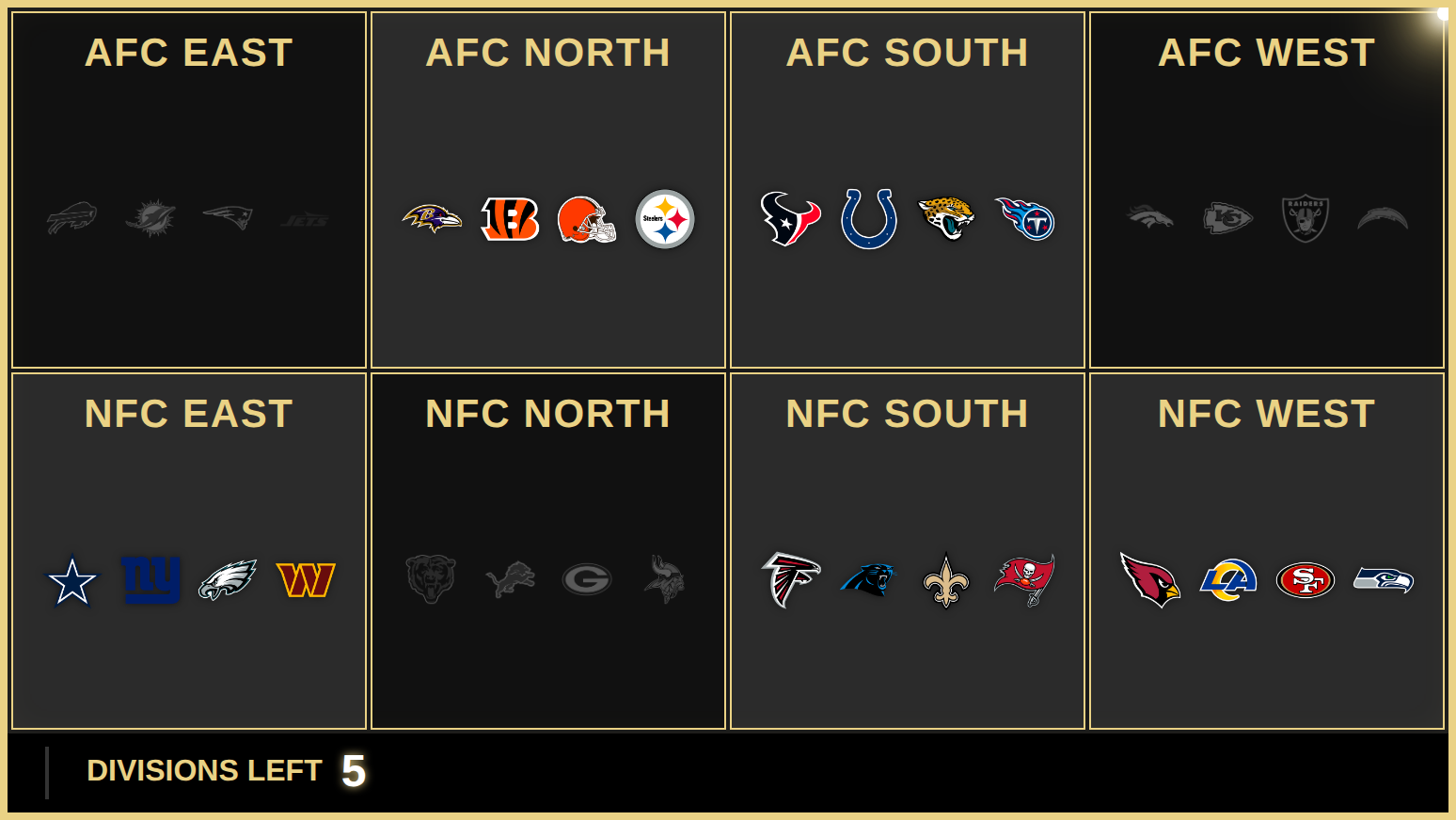
A divisional break sells whole divisions. One buyer takes every team in the division, so there are far fewer spots and each one is worth more.
| League | Divisions | Teams in each |
|---|---|---|
| NFL | 8 | 4 |
| MLB | 6 | 5 |
| NBA | 6 | 5 |
| NHL | 4 | 8 |
Divisional breaks suit expensive products, where a single team spot would cost more than most buyers want to spend, and small rooms, where filling thirty spots would take all night.
On a board: a divisional board has one tile per division with every team mark on it. See how divisional breaks work.
Pick your player (PYP)
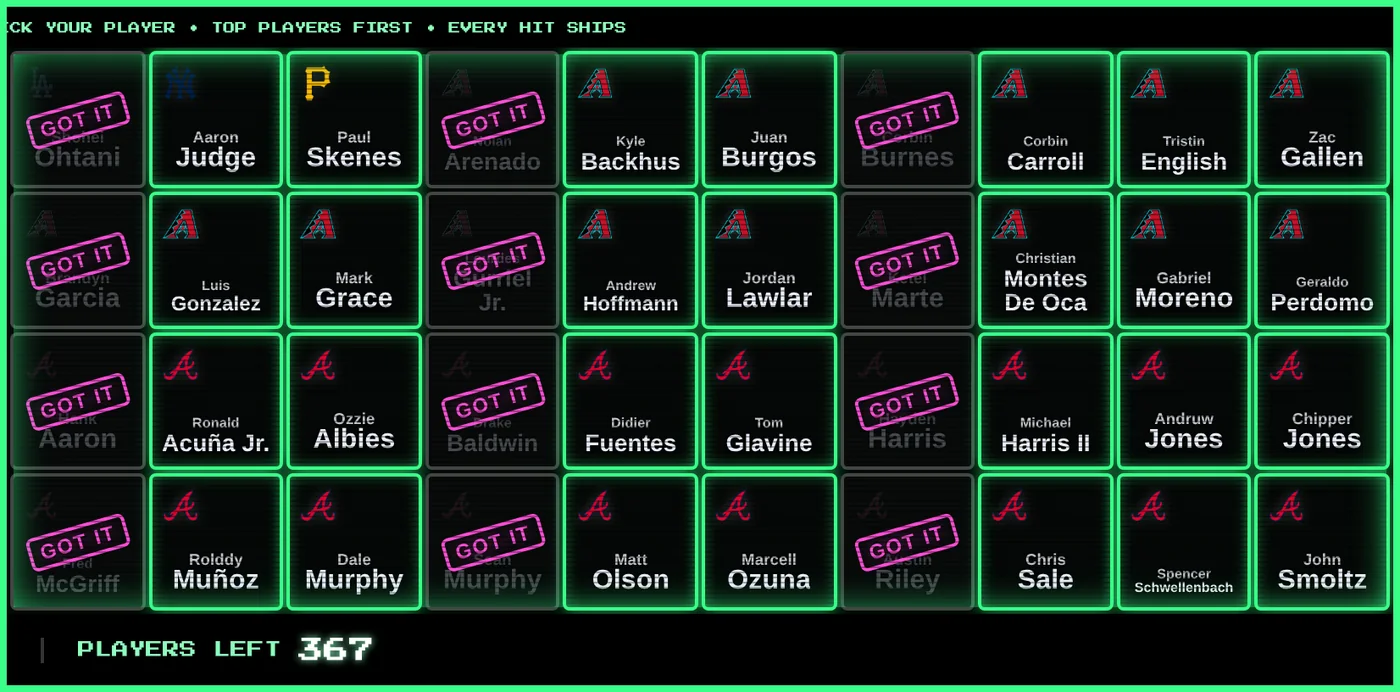
In a pick your player break, the spots are players, not teams. A buyer chooses a player and gets every card of that player pulled from the break.
PYP works best for products with a deep checklist and a few names carrying most of the value: prospect products, rookie-heavy releases and anything where buyers chase one person. The breaker usually sells the top players one by one and groups the rest into a single spot, often called The Field.
The same break sold blind is a random player break. Every spot costs the same, and once the spots are sold a randomizer gives each buyer a player. It is to pick your player what a random team break is to pick your team.
Player breaks are how a case is usually sold. Across a whole case every player on the checklist has cards, so a player spot is worth buying, whether the buyer picked the player or drew one.
The hard part is the list. A flagship product can have several hundred players, so the board has to show them a page at a time and still let the breaker find one name fast.
On a board: a player break board is built from the product's checklist, top players first. A random player break runs on the same board: each player is marked sold as it is drawn. See how to run a player break.
High bid
In a high bid break, teams are sold one at a time at auction, and the buyer who paid the most for any single team also wins the last team on the board. The last team is never sold. It is the prize.
That turns every sale into two things at once: a team sold, and a possible new leader. The breaker usually holds the best team back as the last team, so the whole break builds toward it.
On a board: the board shows the current high bid and who holds it. See the high bid guide.
Box, case and pack breaks
These describe how much is being opened, and they combine with the formats above.
- A box break opens one box. Spots can be teams, or the buyers can each take a share.
- A case break opens a whole sealed case, often 12 boxes. Case breaks are usually player breaks: buyers pick their player or draw a random one, and get every card of that player from the whole case. Some are sold by team.
- A pack break sells the packs themselves. Each buyer buys a pack, or a pack number, and keeps what is inside.
- A personal is one buyer buying a whole box and having the breaker open it for them on stream.
- A mixer opens several different products in one break, with the spots covering all of them.
When boxes or packs are the spots, the buyer is buying a number: Box 4 of 12, or Pack 131 of 200.
On a board: a custom board gives every box, pack or numbered spot its own tile, up to 1,000 on one board. See how to build your own board. A case sold by player runs on a player break board.
Serial number breaks
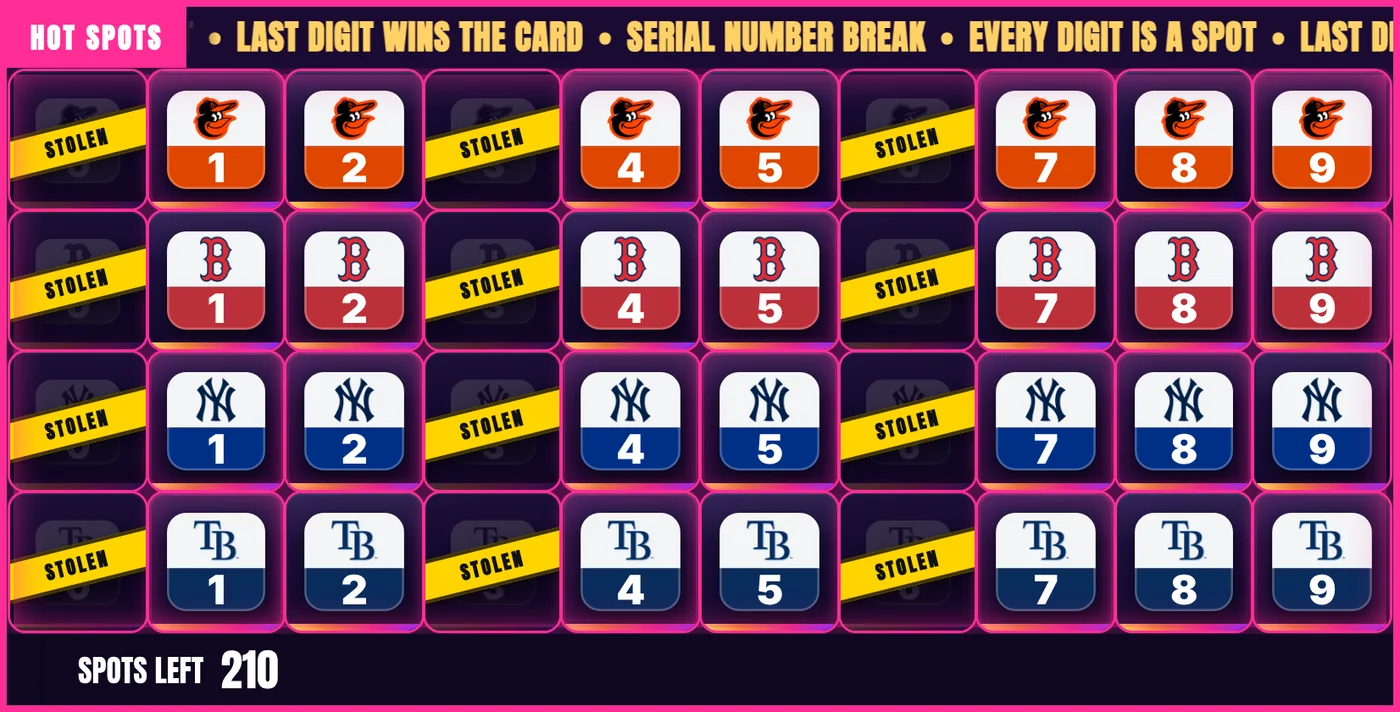
Many cards are serial numbered: stamped with a number like 07/99, meaning the seventh copy of ninety-nine. In a serial number break, buyers buy a digit from 0 to 9, and each numbered card goes to the buyer whose digit matches.
Most breakers use the last digit of the card's own number, the part before the slash. With 07/99, the buyer holding 7 gets the card. Some run it per team, so a buyer holds "Yankees 7" and gets every Yankees card ending in 7. That makes ten spots a team.
Two rules need to be said before the first spot sells: which digit counts, and what happens to cards with no serial number.
On a board: a serial number board gives each team its own digits, with the team's logo on every tile. See the serial number section of the custom board guide.
Hit draft
In a hit draft, the break is opened first and the hits (autographs, relics, numbered and case-hit cards) are set aside. A randomizer sets a draft order, and buyers take turns choosing a hit until they are gone.
Every buyer leaves with a hit, which is the appeal. The first pick gets the best card in the break and the price of a spot reflects that everyone has the same chance at it. What happens to the base cards is up to the breaker.
On a board: a board of numbered spots sells the places and a wheel sets the draft order. The board tracks which spots are sold. It does not track the hits themselves.
Multi-sport breaks
A multi-sport break mixes products from several leagues and sells spots by market, not by team. The buyer of "New York" gets the New York teams across every league in the break.
It is the usual format for multi-sport repack products, and the first job is deciding which teams share a spot when a market has two teams in one league.
On a board: see how to build a multi-sport break.
Breaks without teams
Not every product has teams, so the spot becomes whatever the cards are sorted by.
- Pokémon is often broken by type: Grass, Fire, Water and so on. Every card goes to the buyer holding its type. See how to run a Pokémon type break.
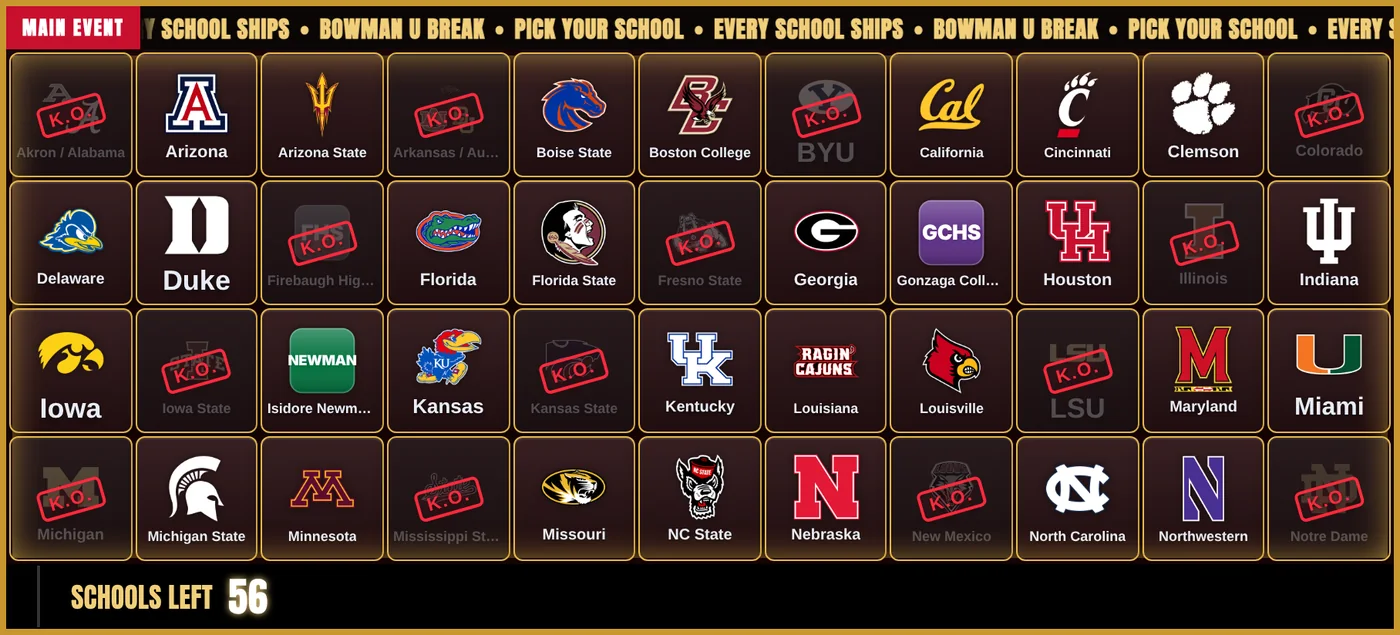
- College products such as Bowman U are broken by school, with schools that have few cards often sold together as one spot.
- UFC is broken by weight class, because the checklist has no teams and too many fighters for one tile each. See UFC breaks.
- F1 is broken by driver or by constructor. See F1 breaks.
Which format should you run?
- A flagship product with a balanced checklist: PYT if your room knows the teams, random team if you want every spot to sell at the same pace.
- An expensive product or a small room: divisional, so there are fewer spots to fill.
- A prospect or rookie product where a few names carry it: pick your player.
- A whole case: a player break. Pick your player if your room knows the checklist, random player if you want every spot at one price.
- A product heavy on numbered cards: a serial number break keeps every buyer in every pack.
- A room that wants everyone to leave with something: a hit draft.
- One team everyone wants: high bid, with that team held back as the last team.
Whatever you run, say the rules before the first spot sells: what a spot is, which cards go with it, and what happens to the cards that fit no spot.
Quick answers
What does PYT mean? Pick your team. Each buyer chooses the team they want and gets every card pulled for it.
What does PYP mean? Pick your player. The spots are players, and each buyer gets every card of the player they chose.
What is a random player break? A player break sold blind. Every spot costs the same and a randomizer gives each buyer a player. It is common for case breaks.
Is a random team break cheaper than PYT? A random spot costs less than the top teams in a PYT break and more than the bottom ones. Everyone pays the same and the draw decides the team.
What is The Field? In a player break, the one spot that covers every player not sold on their own.
What happens to cards that fit no spot? That is the breaker's rule, and it should be stated before the break sells. Common answers are a random draw among the buyers, or the cards going to a named spot.
Can one board run more than one format? A break has one format, but a stream can have several boards. Breakers often run a team board for the main break and a wheel beside it for the random spots.